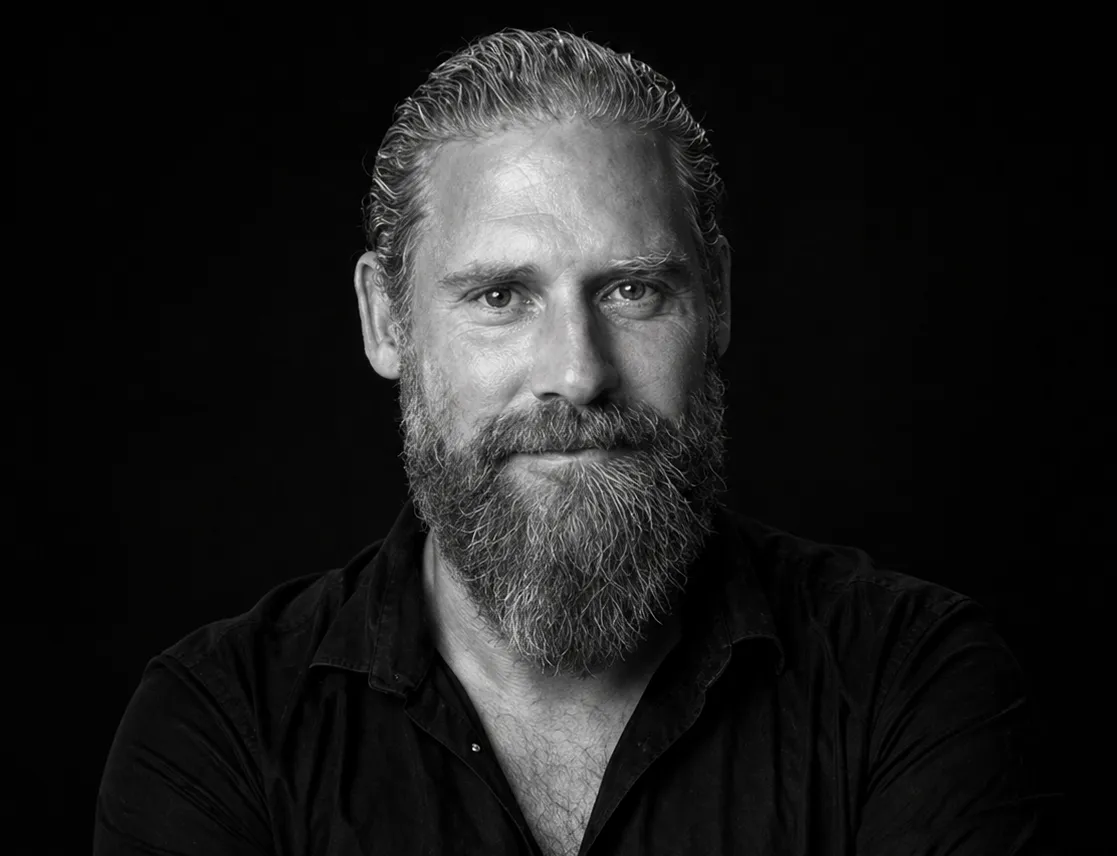
I build software that ships.
And I fix the systems that stopped.
I run my own products, alone, from idea to paying customers. And I step into other people's ventures as the technical partner they can't hire. Fifteen years inside enterprise systems is why the judgment is worth something. Building is what I do with it.
Started in the server room. Still build like it.
Two kinds of work, one job: I build and ship my own software products, solo, and step into other people's ventures as their technical partner. Both run through unoarch.com.
Things I built and put online.
Not prototypes. Live software, on my own infrastructure, that strangers can open right now. Each one started as a real problem, usually mine.
Consistent characters and scenes for children's books. Built because my wife needed it and no tool could hold a character across pages. It has paying customers.
An interpreter with judgment, not a translator. Built in a Portuguese maternity hospital where nobody spoke English and word-for-word was not enough.
A personal page for one prospect instead of a PDF, with honest analytics behind it. In open beta.
Personalised audio for birth preparation, generated per person rather than picked off a shelf.
The same engine pointed at a different room. One backend, two products, forked in an afternoon.
A multiplayer browser game built with my daughter, to teach her what shipping something real feels like. Kids play on it.
Most people who advise on software have not shipped any in years. That is the whole difference, and it is why the advice below is worth listening to.
And the fifteen years underneath it.
Enterprise architecture, carve-outs, identity and integration. This is where the judgment came from, and it is still the work I am called in for.
Growth or a merger left you with a patchwork of systems.
Different systems, different countries, no shared source of truth. I pull that patchwork into one operating model that works the same way everywhere.
Your team does by hand what the system should do.
When growth means hiring just to keep up with repetitive work, something's wrong. I find where the time goes and automate the core of it, so you can grow without growing headcount at the same rate.
You need to cut a company loose from its parent, without breaking it.
Carve-outs expose weak systems fast. Everything has to keep running for customers while the technical ties are cut, one by one. I've led that kind of separation end to end, with no disruption to the business.
Nobody trusts the systems enough to change them.
When the architecture has quietly turned fragile, every new project becomes a risk. I find what's actually load-bearing and stabilize it, so the organization can move forward again.
The plan looks right on paper. It doesn't work in production.
A lot of architecture stops at the diagram. I stay past that point until I know the plan holds, and make sure it does before I call it done.
I don't just deliver advice; I deliver the work that gets your organization there. View my career history for proof.
How I
work
I create the most leverage when a system has to keep running while it changes underneath.
I work deep in the stack, start fast, and stay until the solution is running.
High-stakes delivery.
Company Carve-out
Company being separated from its parent, across multiple countries
Workflow Automation
Manual processes slowing operations
Multi-Country Integration
Fragmented systems across 4 countries
Access Control
Nobody had a clear grip on who could access what
Strategy that thrives in live environments.
I unify technical vision with live infrastructure. By living where logic meets hardware, I ensure that complex architecture is actually implementable.
I don't just deliver reports; I deliver the field-tested logic that powers growth, spotting technical patterns early and building solutions that scale without collapse.
The Builder-Architect Story